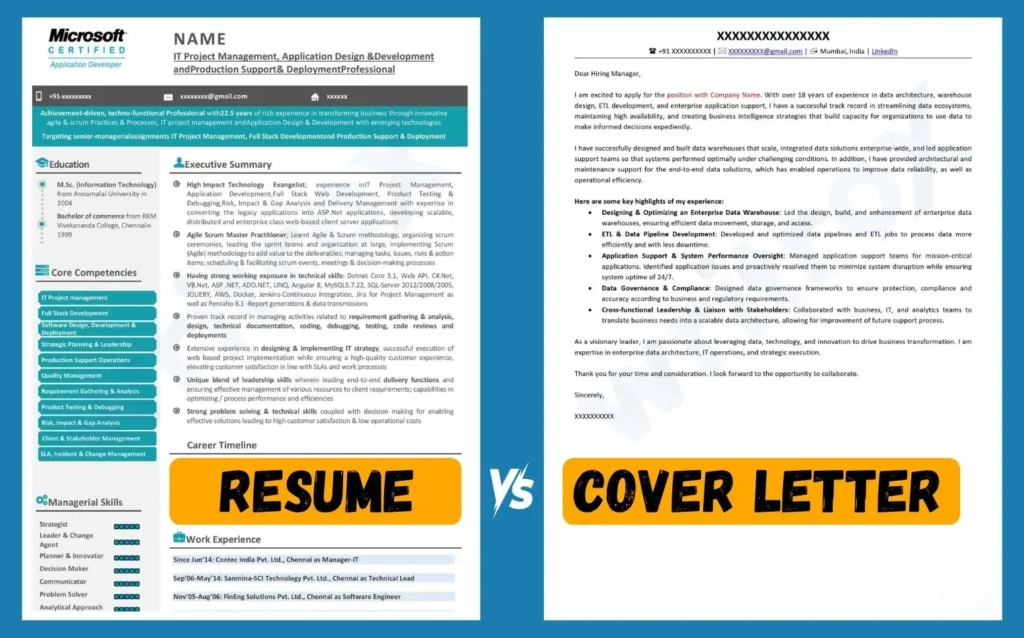
Job hunting comes with its own set of small confusions, and one that causes problems for a lot of applicants is what they should pay attention to when it comes to a resume vs resume cover letter. Both documents land in the same application folder, both talk about your career, yet employers expect something different from each one. So, this guide walks through what makes a resume a resume, what makes a cover letter a cover letter, and the difference between resume and cover letter structure.
What is a Resume?
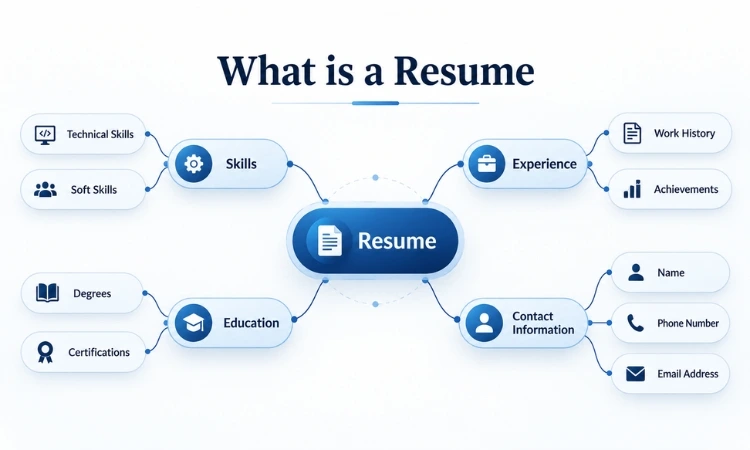
A resume is a document that is usually one page long and is designed to provide a concise outline of a candidate’s previous work experience, skills, and education to a recruiter. On average, a recruiter spends just 7.4 seconds on the initial scan of a resume before deciding whether to look closer, according to Ladders’ well-known eye-tracking study, so a resume needs to speak fast. A resume is not really a story but rather an organised list of what you can offer.
What Does a Resume Include?
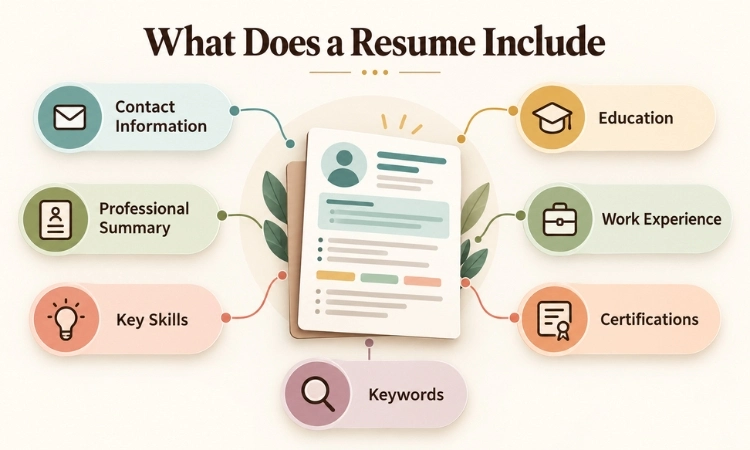
There are some standard sections that a good resume usually consists of:
- Contact information – Name, phone number, email address, and the city (LinkedIn or a portfolio link is optional)
- Professional summary or objective – Two to three lines outlining background or a tailored Career Objective for Resume sections
- Work experience – A list of previous jobs in reverse chronological order
- Skills – Essential Skills to Write in a Resume document include both technical and soft abilities required for the position
- Education – Degrees obtained and institutions, year of graduation
- Certifications – Professional or educational licenses and certificates
- Additional sections – For example: volunteering, publications, awards, or projects, if applicable
However, there are cases when not all the sections above need to be included. You may omit the unnecessary parts and focus on proving your qualifications.
What is the Purpose of a Resume?
The purpose of a resume is to perform three functions quickly:
- Give recruiters an overview of your qualifications without having to dig through them.
- Highlight relevant work experience and achievements related to the position you are applying for.
- Prove you meet the basic requirements for the position in question.
So, a resume is all about proving, in bullet points, that you are capable of performing the job.
What is a Cover Letter?
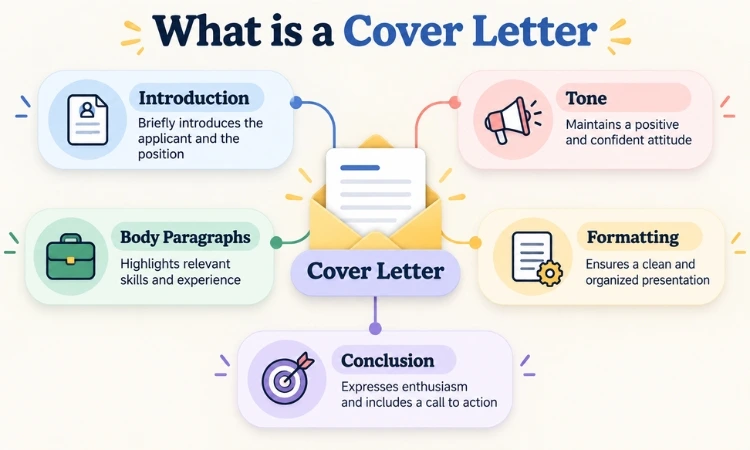
A cover letter is a brief document accompanying your resume, written for the recruiter. While a resume presents facts, a cover letter for a job application provides the opportunity to speak about yourself, describe why this specific job attracted your attention, and explain how your background connects to the employer’s requirements.
What Does a Cover Letter Include?
A cover letter consists of the following components:
- Contact information – Your name, phone number, and email address, usually placed at the top
- Employer information – Name of the hiring manager, company name, and address if possible
- Greeting – A professional greeting, ideally directed to a specific person
- Opening paragraph – The statement of the role you are applying for
- Information on relevant skills and achievements – One to two paragraphs explaining how your background relates to the requirements of the position
- Explanation of interest in the position – The reason why this company and this particular position caught your attention
- Closing paragraph – A concluding paragraph calling the recruiter to action
- Professional sign off – “Sincerely” or “Best regards,” followed by your name
What is the Purpose of a Cover Letter?
A cover letter performs several functions at once:
- Introduces yourself in a more friendly manner than a resume does
- Explains why you are interested in the position
- Relates your experience to the requirements of the company
- Provides additional information, which may not be suitable to put into a resume, for example, a situation where you’re switching careers or had a gap in your employment
Resume vs Cover Letter: Key Differences
Below is a comparison highlighting the primary resume and cover letter difference aspects across key evaluation factors.
Factor | Resume | Cover Letter |
Main purpose | Summarizes qualifications | Explains interest and fit |
Format | Sections and bullet points | Business letter and paragraphs |
Length | Usually 1-2 pages | Usually 1 page |
Content | Experience, skills, education and achievements | Relevant experience, motivation and career story |
Writing style | Concise and factual | Personalised and narrative |
Personal voice | Limited | More personal and conversational |
Focus | Overall professional background | Specific job and employer |
Use | Generally required for applications | Required when requested; may also be useful when appropriate |
Neither of the documents replaces the other. A resume presents facts while a cover letter adds sense to those facts.
Resume vs Cover Letter: Which One Do You Need?
Here are some cases or scenarios where you should use a resume or a cover letter:
When Should You Use a Resume?
A resume is virtually mandatory for job application purposes. Use it:
- When applying for a job, internship or even a volunteer position
- When you switch careers and want to prove you can apply your skills in the new environment
- While networking, if a recruiter asks you to give a short overview of your background
- In case you’re trying to get an internal promotion at your current company
So, use a resume if you’re applying anywhere.
When Should You Use a Cover Letter?
If you’re applying for a job and a cover letter is requested, your cover letter matters the most in these situations:
- When the job posting requests a cover letter (do not forget to submit it there)
- When you switch industries and need to explain how you can transfer your skills
- If you have an unusual career path or a gap in employment worth mentioning
- If you were referred to this position by someone
- If you really want to stand out among other generic applicants
Do not send a cover letter when the employer tells you not to, and also if you have no place to attach it at all in the application form.
How Do a Resume and Cover Letter Work Together?
Some degree of overlap in the information is acceptable, even expected. The difference is in the way the information is presented. A key aspect of understanding pairing is that your resume and cover letter work as complementary tools: one states the facts while the other explains the story behind them.
Resume: “Managed a digital marketing campaign that increased website traffic by 40%.”
Cover letter: You would take the same achievement and explain what was involved in this campaign, which channels you used, what strategy you used. Maybe you’ll explain why this specific experience makes you a perfect fit for this new job. Or maybe you’d mention the team you managed or the budget constraints you had to cope with.
Important note: A cover letter should provide additional information on the relevant resume information rather than rewrite your resume in paragraph form. If your cover letter just reformulates the bullet points into sentences, it does nothing, and hiring managers realise it quickly.
Resume vs Cover Letter: Formatting Differences
Resume Formatting
- Headings for each section that are clearly marked
- Bullet points instead of paragraphs
- Scannable and concise sections
- Easy to read in less than a minute
- Consistent formatting (including fonts, margins, and spacing)
- Relevant keywords taken straight from the job description
Cover Letter Formatting
- Professional letter format
- Proper greeting to the hiring manager, ideally including their name
- Concise paragraphs, not a wall of text
- Professional closing and sign-off
- Usually a one-page maximum, without exception
This is probably the easiest way to distinguish these two documents by formatting alone, without actually reading a word of either.
How to Write a Resume?
Learning How to write a Resume can be done quite easily by following this step-by-step process:
- Include contact information in the header
- Write a short and concise professional summary
- Include relevant work experience, starting from the most recent
- Emphasise measurable accomplishments instead of duties
- Mention relevant skills required for the job
- Provide education and certifications, if any
- Tailor the resume specifically to the job description
- Proofread and double-check
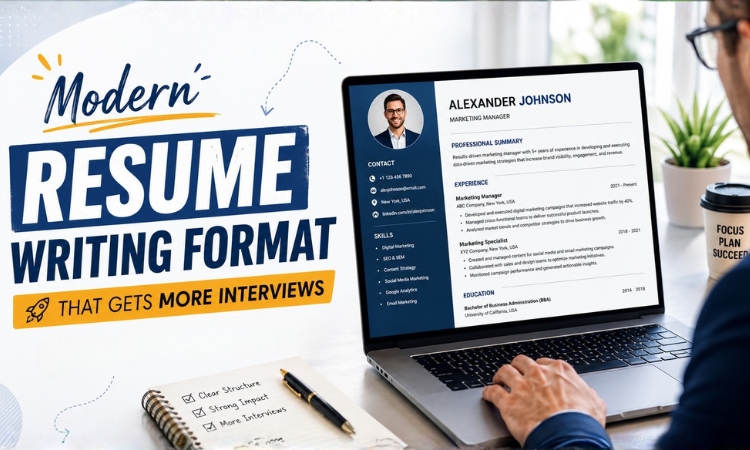
The key aspects of an effective Resume Writing Format are simplicity and consistency. If you’re not sure about the format, you should take a look at some examples first.
How to Write a Cover Letter?
When reviewing How to Write a Cover Letter, follow this straightforward step-by-step approach:
- Include contact information at the top
- Greet the hiring manager by name (if you have it)
- State the position you’re applying for
- Describe your interest in this specific company
- Provide relevant experience that you have
- Describe how your skills match the requirements of the job
- Close with a professional message and call-to-action
If you struggle with the format of your letter, taking a look at Best Short Cover Letter Examples will be helpful.
Common Mistakes You Should Avoid
Resume Mistakes
- Making the resume too long and including too many unnecessary details
- Including irrelevant experience with no connection to the position
- Being too vague with numbers and details
- Listing only duties and responsibilities, not accomplishments
- Bad formatting that makes the document difficult to scan
- Not tailoring the resume to the job description
Cover Letter Mistakes
- Replicating the resume word-for-word
- A generic cover letter written once and reused for every position
- Making it too long — anything more than one page doesn’t make sense
- Failing to mention the position you’re applying for
- Not connecting your experience with the needs of the employer
- Spelling and grammar mistakes that are easily caught
Resume vs Cover Letter Example
Reviewing real-world resume vs cover letter examples makes these differences clear. Take this sample for a Digital Marketing Manager position:
Resume Sample
For this particular job, the resume will include:
- Position held and years of experience in digital marketing
- Campaigns managed and digital channels worked with
- Digital marketing skills (SEO, paid advertising, content strategy, etc.)
- Accomplishments like growth in traffic and lead generation metrics
- Educational background (degree obtained and relevant courses/certificates)
Cover Letter Sample
The cover letter for this particular candidate will include:
- Reason for interest in this particular job at this particular company
- Campaign experience in more detail
- One accomplishment and what was done to achieve it, with context
- How their skills fit the needs of the company
These resume and cover letter samples describe the same person with the same background, but presented differently in each document.
Quick Checklist Before Applying
Resume Checklist
- Contact information updated
- Relevant experience included
- Skills matched to the job description
- Accomplishments are measurable
- Formatting is consistent throughout the document
- No spelling or grammar mistakes
Cover Letter Checklist
- Tailored specifically for this position
- Right company name and job title included
- Relevant experience mentioned, not everything
- Does not repeat the entire resume
- Professional tone throughout the document
- Closes with a professional message and a call-to-action
This checklist takes no more than ten minutes to go through, and it prevents you from sending out half-done documents. If you feel that writing either of them is too hard, professional Resume Writing Services are always an option.
Conclusion
At the end of the day, the resume vs cover letter debate isn’t really a debate. Both documents serve the same goal, landing you an interview, but they get there differently. A resume proves what you’ve done. A cover letter explains why it matters for this particular job. Skip either one when it’s expected, and you’re leaving part of your story untold. Use both well, tailored and specific, and you give yourself the strongest possible shot at getting noticed.
FAQs
1. Which is more important, a resume or a cover letter?
A resume is almost always required, so in that sense it carries more weight by default. A cover letter isn’t always mandatory, but when requested, skipping it can cost you the interview.
2. Can I use my resume as a cover letter?
Not really. A resume is built from bullet points and facts, while a cover letter needs full sentences, a personal tone, and an actual narrative. Submitting one in place of the other usually reads as incomplete.
3. What is the difference between a CV, resume, and cover letter?
A CV is a longer, more detailed document typically used in academic or research fields. A resume is shorter and tailored to a specific job. A cover letter is neither; it’s a letter that introduces and explains both.
4. Can a resume and cover letter have the same information?
Some overlap is normal and expected. What matters is that the cover letter expands on that information rather than just repeating it word for word.
5. What should I write first, a resume or a cover letter?
Most people start with the resume since it lays out the raw facts, then build the cover letter around those same achievements, adding context and personality on top.
Career notes from our writers
Once a fortnight, our resume writers send one short email on what is actually getting people shortlisted. No fluff, unsubscribe any time.

Written by
Rahul Ranjan
Rahul Ranjan is the Founder and Director of Writrox Solution Private Limited, where he has spent the last several years helping professionals transform the way they present themselves in today's competitive job market. From early-career professionals to CXOs and founders, his work has supported thousands of individuals in building stronger professional identities through strategic resumes, LinkedIn profiles, executive biographies, and personal branding.