Writing a CTO resume is a different exercise from writing any other resume. You’re not listing jobs. You’re documenting how you built, scaled, and sometimes rebuilt technology organizations under real business pressure. Most CTO resumes fail not because the candidate lacks substance, but because the document doesn’t reflect the level the candidate has actually operated at.
Two failure modes show up constantly. Some resumes read like a senior engineer’s LinkedIn deep on stack, silent on business impact. Others go the opposite way full of executive language with no evidence behind it. Neither gets a callback from a board or a CEO doing the hiring.
This guide covers the ten sections a strong CTO resume needs, the mistakes that quietly disqualify otherwise strong candidates, and because it matters more at this level than people admit what actually gets a CTO resume in front of the right person in the first place.
Why This Document Still Matters at the C-Suite Level
Executive recruiters and board members review large volumes of resumes, and most give each one a matter of seconds before deciding whether to keep reading. A CTO resume is competing against other credentialed, experienced leaders, so the margin for a vague or generic document is essentially zero.
Applicant tracking systems add another layer of scrutiny even at senior levels. If a resume isn’t structured cleanly or lacks the right language, it can be filtered out before a human ever reads it. Getting the format and content right isn’t a formality, it’s often the difference between an interview and silence.
The 10 Sections Every CTO Resume Needs
1. A Sharp Executive Summary
Three to five lines. No filler like “results-driven leader with a passion for technology” that phrase appears on thousands of resumes and signals nothing.
State who you are, the type of company and stage you’ve operated at, and what you delivered:
“CTO with 15 years leading technology for Series B–D SaaS companies. Scaled engineering from 5 to 80+, cut infrastructure costs 40%, and shipped three product lines generating $50M in combined revenue.“
That’s the vibe. Specific. Confident. Punchy. Think of the CTO Resume Summary as your elevator pitch in written form, and yes, you can also treat this as your Career Objective for a resume if you’re positioning yourself for a specific type of role. So, make it count.
2. Core Leadership and Technical Skills
This section is important for two reasons. First, it helps recruiters quickly scan your fit. Second, it’s how you make your CTO resume ATS-friendly; you’re feeding the algorithm the keywords it’s looking for.
Keep it clean. Two columns, bullet points, no paragraphs.
Split it into leadership skills (strategic planning, P&L ownership, stakeholder management, cross-functional leadership) and technical skills (cloud architecture, DevOps, API design, system scalability).
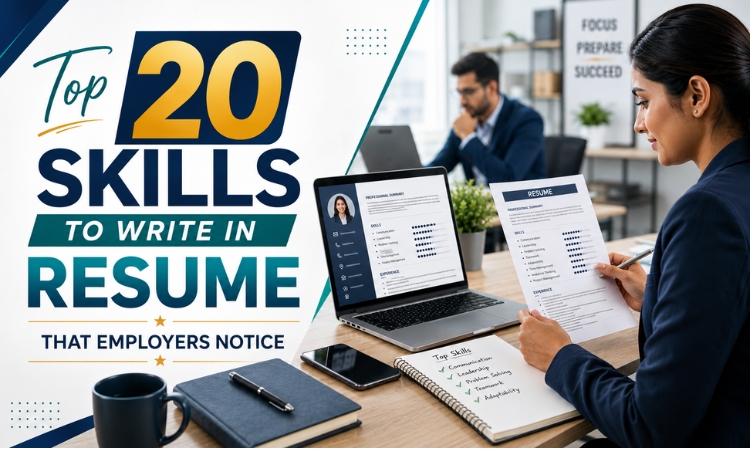
When thinking about the top skills to write in a resume for a CTO role, don’t just throw in every tool you’ve ever touched. Pick the ones that are actually relevant to where you’re applying. Tailor this section every single time.
3. Professional Experience
This is where most resumes lose credibility. Job descriptions (“responsible for overseeing the engineering team”) say nothing about outcomes. For each role, structure it as:
- Company, title, dates
- One line of context – what the company does, its size and stage
- Four to six bullet points describing outcomes, not duties
“Managed cloud migration” says little. “Led AWS migration that cut infrastructure spend by $2M annually” says everything a reader needs. This section either establishes your credibility or costs it.
4. Key Achievements
Even if you’ve sprinkled wins throughout your experience section, a dedicated achievements section gives you a chance to highlight your biggest, most impressive results all in one place. Think of it as your highlight reel.
The categories that tend to matter most for CTO-level roles:
- Revenue growth: Did you build a product or platform that directly contributed to new revenue? How much? Quantify it.
- Cost optimisation: Cloud spend reduction, vendor renegotiations, infrastructure consolidation. These things land really well with boards.
- Product launches: How many products did you ship? What was the user adoption? Time to market?
- Digital transformation: Led a legacy company through a full tech overhaul? This is a big one. Give the scope of timeline, budget, and scale.
- Team scaling: Grew an engineering org from 10 to 150 people? Hired and retained top talent in a brutal market? That matters.
Pick your five or six strongest wins and give them their own spotlight here. Brevity is key, as this isn’t a second experience section. One or two lines per achievement.
5. Education
Yes, education still goes on a CTO resume. Even if you’ve been out of school for 20 years, keep it simple with your degree, institution, and graduation year. If you have multiple degrees, list the highest first.
You don’t need to list every course you took or your GPA unless it was exceptional and you graduated recently. For senior-level roles, your experience speaks louder than your transcripts.
6. Certifications
Certifications signal you’re still close to the work, which matters more the further a CTO gets from day-to-day execution. Only include what you’ve actually earned:
- Cloud – AWS Solutions Architect, Google Cloud Professional, Azure Architect
- Process/scale – SAFe, PMP, PMI-ACP
- Security – CISSP, CISM, particularly relevant as boards increasingly expect CTOs to own security posture alongside the CISO
- AI/data – TensorFlow Developer, AWS Certified ML, or equivalent
- Executive education – Stanford GSB, Harvard, Wharton programs, which add board-level credibility even without being technical credentials
7. Technology Stack
Expected for a CTO resume, even if not exhaustive. Curate rather than list everything:
- Languages you’ve built in or overseen – Python, Go, Java, TypeScript
- Cloud platforms – AWS, GCP, Azure, hybrid environments
- DevOps tooling – Kubernetes, Docker, Terraform, CI/CD pipelines
- Databases – PostgreSQL, MongoDB, Snowflake, Redis
- Emerging tech – LLMs, RAG architectures, MLOps, vector databases, where relevant
The goal is credibility, not comprehensiveness.
8. Leadership and Management Experience
This deserves its own section, separate from Professional Experience. At the CTO level, how you build and lead people is as important as any technical decision you’ve made.
Specifically cover:
- The largest team size you’ve managed (directly and indirectly)
- Org structure changes you’ve led (from flat to scaled, VP hiring, etc.)
- Culture and retention wins How you ran executive stakeholder relationships (board, CEO, CPO)
- Budget ownership – how much were you responsible for?
Hiring managers and boards want to know: can this person build a world-class engineering organisation? Show them you’ve done it before.
9. Major Projects and Business Impact
This is your portfolio section, basically. Pick two or three signature projects that showcase both your technical chops and your business impact. Briefly explain the project, your role, the challenge, what you built, and the result.
This doesn’t need to be long. Keep it to one short paragraph or three tight bullet points per project. Think platform rebuilds, AI product launches, M&A tech integrations, and company-wide migrations. The kind of work that changed the trajectory of a business.
These stories are what come up in interviews. Write them here so you’re already telling them on your resume.
10. Awards, Speaking Engagements, and Professional Memberships
If you’ve spoken at tech conferences, been featured in industry publications, served on advisory boards, or won awards, then this is where it goes. Not everyone has this section, but if you do, use it.
It signals: this person is recognised beyond just their employer. They have a reputation in the industry. That matters when you’re being considered at the executive level.
Memberships in organisations like IEEE, Forbes Technology Council, or CTO Craft also belong here. It’s a small section, but it adds a lot.
Why the Resume Alone Rarely Gets a CTO the Role
This is the part most resume guides skip, and it matters more at this level than the document itself. CTO and CEO-level roles are rarely filled through cold applications. Executive recruiters typically work from warm networks, referrals, and reputational signals long before a resume is formally reviewed. A strong resume gets you through a gate that’s already been opened, it rarely opens the gate itself.
That means two things worth acting on:
- Your public presence carries real weight. A CTO who speaks at conferences, writes about technical strategy, or has a visible track record online is easier for a recruiter or board member to vet before ever picking up the phone. A resume that aligns with that public narrative closes the loop.
- Warm introductions outperform applications. If you’re targeting specific companies, a direct connection to a board member, investor, or existing exec will do more for you than optimizing another paragraph. The resume’s job, in that context, is to hold up under scrutiny once the conversation has already started – not to start it.
Common Mistakes That Quietly Disqualify Strong Candidates
- Running past two pages: Boards don’t read essays. Two pages, no exceptions.
- Generic language: “Innovative leader with a passion for technology” appears on nearly every resume and communicates nothing about you specifically.
- Unquantified claims: If a result can’t be tied to a number, it’s worth asking whether it belongs on the page at all.
- Formatting that breaks ATS parsing: Clean, chronological, and scannable beats a visually elaborate template every time.
- Inconsistent formatting basics: Clear headings, consistent fonts, readable margins — small details that get overlooked constantly.
- Leading with technical depth over leadership evidence: You’re not applying for a senior engineering role. The resume needs to demonstrate you can own a company’s full technology vision, not just its architecture.
- Sending one version to every company: It shows, and it costs you.
Over-focusing on tech, under-selling leadership: You are not applying to be a senior engineer. Show that you can lead a company’s entire technology vision.
Sending the same resume everywhere is lazy and it shows. Tweak it for every role.
If you’re unsure about your resume, consider using professional resume writing services that specialise in C-suite candidates. A second set of expert eyes can catch things you’ve been staring at too long to notice.
Final Checklist Before You Send It
- Executive summary under five lines, specific and quantified
- Skills split cleanly into leadership and technical
- Every role shows measurable outcomes, not just responsibilities
- Certifications are current and genuinely earned
- Technology stack is curated, not exhaustive
- Education included, kept brief
- Projects section demonstrates business impact, not just technical detail
- Two pages or under
- ATS-friendly formatting – no tables, no graphics, clean fonts
- Tailored to the specific role and company
Final Thoughts
A great CTO resume isn’t just a document; it’s a strategic narrative. It’s telling the story of your career in a way that makes the next company think, “We need this person.” That’s the goal.
The resume tips for senior executives are actually not that different from good writing principles in general: be specific, be clear, show don’t tell, and always think about what the reader needs to know. In your case, the reader is a CEO, a board, or a recruiter who has thirty other qualified people in front of them.
Make them stop at yours. Give them a reason to call. Take the time to build your CTO resume properly, or get help doing it. It’s worth it.
FAQs
1. What skills should every CTO resume include?
The must-haves fall into two buckets. On the technical side: cloud architecture, system design, cybersecurity, data engineering, and proficiency across key platforms like AWS, GCP, or Azure. On the leadership side: P&L ownership, executive communication, team scaling, vendor management, and strategic planning. The best CTO Resume Skills section balances both equally because the role itself demands both.
2. How can I make my CTO resume ATS-friendly?
Stick to a clean, single-column format. Use standard section headings (Experience, Education, Skills). Avoid tables, text boxes, headers/footers with key info, and graphics. Use the exact job title keywords from the job description where relevant. An ATS-Friendly CTO Resume is simple by design, as the algorithm rewards clarity.
3. Should a CTO resume include technical skills?
Absolutely, yes. Even though you’re at the executive level, technical credibility still matters. Boards and CEOs want to know you can actually evaluate your team’s work, make architecture decisions, and have informed conversations with engineers. Your technology stack section and certifications are how you prove that credibility on paper.
4. What is the best format for a CTO resume?
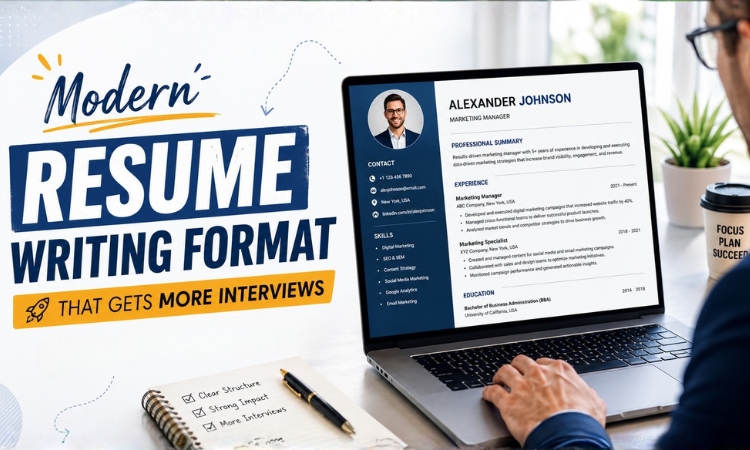
Reverse-chronological is almost always the right call. Start with your executive summary, then skills, then work backwards through your experience. The CTO Resume Format should be clean: two pages, 10–12pt font, standard margins, minimal design. Save the creativity for your portfolio or interviews. ATS systems and human readers both prefer clean over clever. If you need a starting point, looking at a CTO Resume Template or CTO Resume Example online can help you visualise the right structure before you build your own.
5. Is a cover letter necessary for a CTO position?
Technically, no. Practically, sometimes yes. If the job posting asks for one, send one. If there’s a specific context that your resume can’t capture, like a career pivot, a unique reason why this company specifically excites you, a referral situation, a well-written cover letter adds value. But don’t write one just to check a box. A strong CTO Resume Example that speaks for itself is worth more than a mediocre cover letter any day.
Career notes from our writers
Once a fortnight, our resume writers send one short email on what is actually getting people shortlisted. No fluff, unsubscribe any time.

Written by
Rahul Ranjan
Rahul Ranjan is the Founder and Director of Writrox Solution Private Limited, where he has spent the last several years helping professionals transform the way they present themselves in today's competitive job market. From early-career professionals to CXOs and founders, his work has supported thousands of individuals in building stronger professional identities through strategic resumes, LinkedIn profiles, executive biographies, and personal branding.