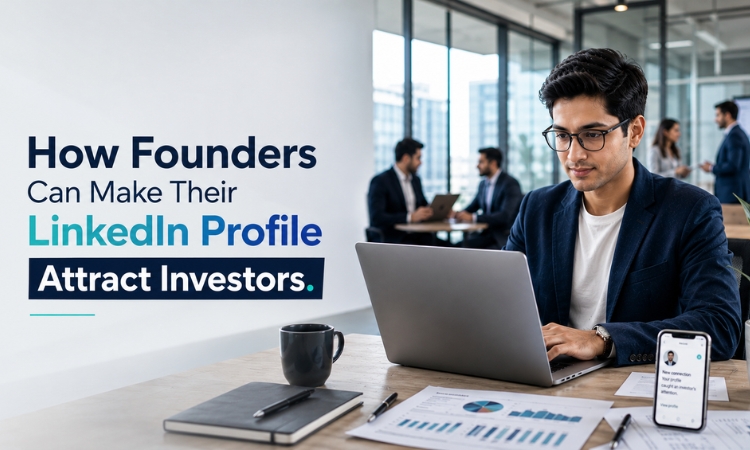
Investors do their homework way before they ever hop on a call with you. Long before that first email reply, most of them are quietly scrolling through your Founder LinkedIn Profile, trying to figure out who you actually are. Are you someone worth betting on? Do you know your industry, or are you just another founder chasing a trend? Your profile answers these questions, whether you like it or not.
Here’s the thing though, a lot of founders treat LinkedIn like an afterthought. They set it up once, maybe during their first job hunt years ago, and never touch it again. That’s a mistake, and a costly one, because in 2026, your LinkedIn page functions almost like a brand storyteller. It’s often the first real impression an investor gets, sometimes even before your pitch deck lands in their inbox.
This blog walks through exactly how to fix that. We’ll go section by section, headline to featured posts, so your profile actually works in your favor when it matters most. Consider this your practical guide on How To Optimize A LinkedIn Profile as a founder, not just another job seeker, so it actually pulls its weight during fundraising.
Why Your Founder LinkedIn Profile Matters to Investors
Think about it from an investor’s chair for a second. They see hundreds of pitch decks a month, sometimes more. Names blur together. Numbers blur together. What sticks, though, is the person behind the pitch. And where do they go to check that person out? LinkedIn, nine times out of ten.
A well built Executive LinkedIn Profile does a lot of quiet work for you. It signals credibility before you’ve said a single word in a meeting. It shows investors that you understand branding, since if you can’t manage your own online presence, how will you manage a company’s? It also gives them a shortcut into your network, your past wins, your industry standing, all the things a resume simply cannot capture in the same way.
There’s also a trust factor at play here. Investors are putting money behind people, not just ideas. A profile that looks thin, outdated, or generic makes them pause. Not necessarily reject you outright, but pause. And in fundraising, that pause can cost you momentum you didn’t know you needed.
Strong LinkedIn Personal Branding plays a bigger role in this than most founders admit. It’s not about looking flashy or curated to perfection, it’s about looking consistent. When your headline, your About section, and your posts all point in the same direction, investors sense that clarity almost instantly, even if they can’t always name why they trust you more.
Optimise Your LinkedIn Headline for Investor Attention
Your headline sits right under your name, and it’s probably the most looked at, yet most neglected, part of any profile. People spend hours on their About section and five seconds on their headline. That ratio needs to flip, especially since a solid LinkedIn Profile for Founders almost always starts right here, at the headline level.
1. Include Your Startup and Value Proposition
Don’t just write “Founder at XYZ.” That tells an investor nothing useful. Instead, pack in what your startup actually does and why it matters. Something like “Founder @ XYZ | Building AI tools that cut hiring time by 60%” does far more heavy lifting. It’s specific, it’s measurable, and it gives a scroller a reason to click further into your profile.
2. Use Founder and Industry Keywords Naturally
This is where LinkedIn Profile Optimisation starts to matter for search too, not just human eyes. Investors, and LinkedIn’s own algorithm, often search using industry terms like fintech, SaaS, climate tech, whatever fits your space. Slipping these into your headline naturally (not stuffing them in awkwardly) helps you show up in those searches. Say “Fintech Founder” instead of just “Entrepreneur,” if that’s genuinely what you are. Small tweaks like this count as one of those simple yet effective LinkedIn Optimisation Hacks that founders tend to overlook completely.
3. Avoid Generic Headlines
Headlines like “Passionate entrepreneur | Dreamer | Building something great” sound nice on paper but they say absolutely nothing. Investors skim past these in half a second. Be specific, be a little bold even, and let your headline do actual work instead of just occupying space.
Write an About Section That Tells Your Founder Story
The About section is where most founders either shine or completely lose the reader within the first two lines. This part deserves real thought, not a rushed paragraph written at midnight. Genuinely, this single section can make or break your LinkedIn profile optimisation efforts if you rush through it.
- Share Your Mission and Vision
Why does your company exist? What problem woke you up one day and refused to leave you alone? Investors want that context. It’s less about poetic writing and more about clarity; tell them what drives you, plainly and honestly.
- Highlight Business Achievements
Numbers speak louder than adjectives here. Instead of saying you “grew the company rapidly,” say you “scaled revenue from $10K to $200K MRR in 14 months.” One of these convinces an investor, the other just sounds nice.
- Add Social Proof and Results
Mention press coverage if you’ve had any, accelerator programs you’ve been part of, notable partnerships, anything that lends third-party validation. This isn’t bragging, it’s simply giving evidence that others already believe in what you’re building.
Showcase Your Startup Experience Effectively
Your experience section shouldn’t read like a static job description copied from a template somewhere online. Treat each role, especially your current one, as a mini case study. What were you hired (or in this case, self appointed) to solve? What did you actually do about it? What came out of that effort?
Bullet points work well here, but keep them punchy. Avoid long paragraphs that investors will skip past anyway. A good rule of thumb, if a bullet takes more than two lines, trim it down. This is exactly the kind of detail that separates an average Founder LinkedIn Profile from one that actually converts a scroller into a serious conversation.
Highlight Skills, Industry Expertise, and Leadership Experience
Skills sections often get ignored, but they quietly feed into LinkedIn’s search and recommendation engine. List skills that are genuinely relevant, fundraising, product strategy, go to market planning, team leadership, whatever applies to your actual role.
Leadership experience matters a lot too, maybe more than people realise. Investors aren’t just funding a product, they’re funding a person who can lead a team through chaos, pivots, and pressure. If you’ve managed people before, led a previous venture, or held a leadership title anywhere, make that visible and easy to find.
Build Social Proof with Recommendations and Featured Content
Recommendations from mentors, early employees, or past colleagues add a layer of trust that self written content simply cannot replicate. A few genuine, well written recommendations go a long way, far more than a dozen generic ones that all say “great to work with.”
The Featured section is another underused tool. Pin press articles, product demos, pitch decks (an edited teaser version, not your full confidential deck), or blog posts you’ve written. This turns your profile into more than just text, it becomes a mini portfolio investors can browse without needing to ask you for extra material.
Share Valuable Content to Increase Founder Visibility
Posting on LinkedIn regularly isn’t just for influencers or recruiters chasing engagement. For founders, it’s one of the most underrated ways to build credibility over time. Share lessons from building your startup, thoughts on your industry, maybe even honest posts about failures and what they taught you.
This kind of visibility does two things. First, it keeps you top of mind within your network, including investors who may be watching quietly without ever liking a post. Second, it builds a body of proof, over months, that you actually know what you’re talking about. A single great profile is good. A profile backed by consistent, thoughtful content is a whole different level of convincing.
Truthfully, this is where a lot of LinkedIn Optimisation Hacks stop being tricks and start becoming habits. Posting consistently isn’t a hack at all really, it’s just discipline dressed up in a fancy name.
LinkedIn Profile Checklist Before Reaching Out to Investors
Before you send that connection request or cold outreach message, run through this quick checklist. Think of it as a LinkedIn Profile Optimisation Checklist you can return to before every major fundraising push, and honestly, before any big meeting where a LinkedIn Profile for Founders is likely to get checked first.
- Professional photo, clear, well lit, no group photos cropped awkwardly
- Strong headline that states what you do and the value it creates
- Optimised the About section with mission, achievements, and proof
- Updated experience section with real outcomes, not vague duties
- Featured section showing press, decks, or demos
- Genuine recommendations from people who’ve actually worked with you
- Recent posts showing you’re active and thoughtful in your space
- Contact information that’s current, no dead links or old emails
Skipping even one or two of these isn’t the end of the world, but together they build a profile that feels complete, not half finished.
How Professional LinkedIn Profile Writing Helps Founders
Not every founder has the time, or frankly the writing instinct, to craft a compelling profile on their own. That’s fair, running a startup already eats up most waking hours. This is where professional LinkedIn Profile Writing services come in genuinely useful, especially for founders who want a proper LinkedIn Profile Makeover without spending weeks second guessing every sentence.
A skilled writer knows how to translate your achievements into language that resonates with investors specifically, not just recruiters or generic networking contacts. They understand keyword placement without making it feel stuffed, they know how to structure an About section that reads like a story rather than a resume, and they often catch blind spots founders don’t even realise exist. Think of it less as outsourcing and more as getting a second pair of eyes on something that genuinely impacts how investors perceive you before you’ve said a word to them.
A well done LinkedIn Profile Makeover doesn’t just make your page look nicer. It changes how quickly, and how favourably investors form their first impression of you.
Conclusion
Your LinkedIn profile isn’t just a formality sitting somewhere on the internet, gathering dust between job changes. For founders trying to raise capital, it’s often doing silent work in the background, shaping opinions before you ever step into a room. A strong Startup Founder LinkedIn presence, one with a sharp headline, an honest and detailed About section, real proof of your work, and consistent visibility through content, can genuinely tilt an investor’s first impression in your favour.
It doesn’t need to be perfect. It just needs to be intentional, specific, and honestly written. Take an hour this week, go through the checklist above, and start fixing the gaps. Whether you handle LinkedIn Profile Optimisation yourself or bring in help for it, the goal stays the same: a page that reflects who you really are as a founder. Your future investor might already be looking.
Career notes from our writers
Once a fortnight, our resume writers send one short email on what is actually getting people shortlisted. No fluff, unsubscribe any time.

Written by
Rahul Ranjan
Rahul Ranjan is the Founder and Director of Writrox Solution Private Limited, where he has spent the last several years helping professionals transform the way they present themselves in today's competitive job market. From early-career professionals to CXOs and founders, his work has supported thousands of individuals in building stronger professional identities through strategic resumes, LinkedIn profiles, executive biographies, and personal branding.