Writrox

Linkedin Optimization

founders linkedin profile

How Founders Can Make Their LinkedIn Profile Attract Investors

Investors do their homework way before they ever hop on a call with you. Long before that first email reply, most of them are quietly scrolling through your Founder LinkedIn Profile, trying to figure out who you actually are. Are you someone worth betting on? Do you know your industry, or are you just another founder chasing a trend? Your profile answers these questions, whether you like it or not. Here’s the thing though, a lot of founders treat LinkedIn like an afterthought. They set it up once, maybe during their first job hunt years ago, and never touch it again. That’s a mistake, and a costly one, because in 2026, your LinkedIn page functions almost like a brand storyteller. It’s often the first real impression an investor gets, sometimes even before your pitch deck lands in their inbox. This blog walks through exactly how to fix that. We’ll go section by section, headline to featured posts, so your profile actually works in your favor when it matters most. Consider this your practical guide on How To Optimize A LinkedIn Profile as a founder, not just another job seeker, so it actually pulls its weight during fundraising. Why Your Founder LinkedIn Profile Matters to Investors Think about it from an investor’s chair for a second. They see hundreds of pitch decks a month, sometimes more. Names blur together. Numbers blur together. What sticks, though, is the person behind the pitch. And where do they go to check that person out? LinkedIn, nine times out of ten. A well built Executive LinkedIn Profile does a lot of quiet work for you. It signals credibility before you’ve said a single word in a meeting. It shows investors that you understand branding, since if you can’t manage your own online presence, how will you manage a company’s? It also gives them a shortcut into your network, your past wins, your industry standing, all the things a resume simply cannot capture in the same way. There’s also a trust factor at play here. Investors are putting money behind people, not just ideas. A profile that looks thin, outdated, or generic makes them pause. Not necessarily reject you outright, but pause. And in fundraising, that pause can cost you momentum you didn’t know you needed. Strong LinkedIn Personal Branding plays a bigger role in this than most founders admit. It’s not about looking flashy or curated to perfection, it’s about looking consistent. When your headline, your About section, and your posts all point in the same direction, investors sense that clarity almost instantly, even if they can’t always name why they trust you more. Optimise Your LinkedIn Headline for Investor Attention Your headline sits right under your name, and it’s probably the most looked at, yet most neglected, part of any profile. People spend hours on their About section and five seconds on their headline. That ratio needs to flip, especially since a solid LinkedIn Profile for Founders almost always starts right here, at the headline level. 1. Include Your Startup and Value Proposition Don’t just write “Founder at XYZ.” That tells an investor nothing useful. Instead, pack in what your startup actually does and why it matters. Something like “Founder @ XYZ | Building AI tools that cut hiring time by 60%” does far more heavy lifting. It’s specific, it’s measurable, and it gives a scroller a reason to click further into your profile. 2. Use Founder and Industry Keywords Naturally This is where LinkedIn Profile Optimisation starts to matter for search too, not just human eyes. Investors, and LinkedIn’s own algorithm, often search using industry terms like fintech, SaaS, climate tech, whatever fits your space. Slipping these into your headline naturally (not stuffing them in awkwardly) helps you show up in those searches. Say “Fintech Founder” instead of just “Entrepreneur,” if that’s genuinely what you are. Small tweaks like this count as one of those simple yet effective LinkedIn Optimisation Hacks that founders tend to overlook completely. 3. Avoid Generic Headlines Headlines like “Passionate entrepreneur | Dreamer | Building something great” sound nice on paper but they say absolutely nothing. Investors skim past these in half a second. Be specific, be a little bold even, and let your headline do actual work instead of just occupying space. Write an About Section That Tells Your Founder Story The About section is where most founders either shine or completely lose the reader within the first two lines. This part deserves real thought, not a rushed paragraph written at midnight. Genuinely, this single section can make or break your LinkedIn profile optimisation efforts if you rush through it. Share Your Mission and Vision Why does your company exist? What problem woke you up one day and refused to leave you alone? Investors want that context. It’s less about poetic writing and more about clarity; tell them what drives you, plainly and honestly. Highlight Business Achievements Numbers speak louder than adjectives here. Instead of saying you “grew the company rapidly,” say you “scaled revenue from $10K to $200K MRR in 14 months.” One of these convinces an investor, the other just sounds nice. Add Social Proof and Results Mention press coverage if you’ve had any, accelerator programs you’ve been part of, notable partnerships, anything that lends third-party validation. This isn’t bragging, it’s simply giving evidence that others already believe in what you’re building. Showcase Your Startup Experience Effectively Your experience section shouldn’t read like a static job description copied from a template somewhere online. Treat each role, especially your current one, as a mini case study. What were you hired (or in this case, self appointed) to solve? What did you actually do about it? What came out of that effort? Bullet points work well here, but keep them punchy. Avoid long paragraphs that investors will skip past anyway. A good rule of thumb, if a bullet takes more than two lines, trim it down. This is exactly the kind of detail that separates an average

How Founders Can Make Their LinkedIn Profile Attract Investors Read More »

resume writing services and linkedIn optimization work together

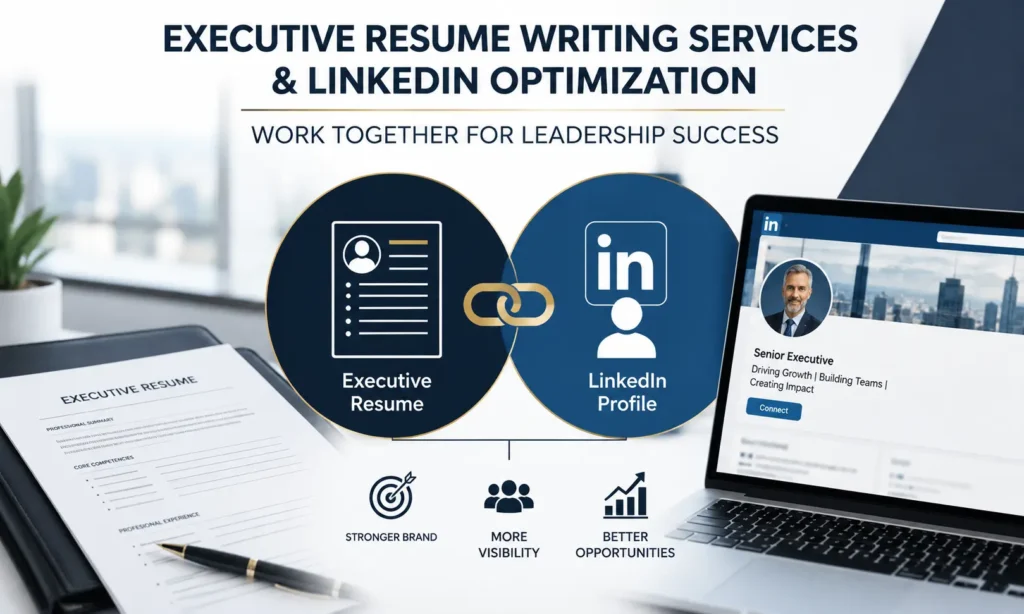
How Executive Resume Writing and LinkedIn Optimization Work Together

At the executive level, opportunities don’t come from just one document anymore. Things have changed quite a lot, actually. And honestly, most senior leaders are still following old rules that don’t work so well now.   A resume can help you reach the shortlist. But recruiters, board members, private equity firms and executive search consultants rarely stop there. They open LinkedIn immediately. They compare. They verify. They check for consistency. Different titles. Missing promotions. Numbers that don’t match. Even small inconsistencies create doubt in their mind. And that doubt quietly kills opportunities without anyone telling you why. That is why successful leaders today don’t treat a resume and LinkedIn as two separate things. Both work together. Both tell one story, one leadership brand, and one narrative. The strongest executive candidates are those who make both channels speak the same language. This guide will discuss how the two work together, and how Writrox helps senior leaders align them properly for maximum impact with executive resume writing services. The Executive Job Search Has Changed Ten years back, things were quite simple. Recruiters looked at resumes and called candidates. That was mostly the whole process. Today? Completely different game. LinkedIn has become the default platform for executive visibility. More than 87% of recruiters use LinkedIn to evaluate candidates before reaching out to them. Many senior roles never even get advertised publicly at all. Executive search firms actively hunt leaders through LinkedIn. Private equity firms Google names before conversations even start. Boards do their own research separately. Everybody checks your digital presence nowadays. The modern executive search is not about choosing between a resume and LinkedIn.It is both. Your resume starts the conversation. Your LinkedIn profile keeps it going. What an Executive Resume Writing Service Actually Does Here are some things that executive resume writing services can do and the impact they can bring: Beyond Formatting: Strategic Narrative Architecture Many people think resume writers simply polish bullet points and fix formatting. But that’s not really the case. Professional executive resume writing services go much deeper than that, actually.  A good writer uncovers your leadership story. They identify the biggest wins. The transformations. The scale. The impact. And then they position those things where decision makers notice them first. Every line answers one question: “Has this person already done what we need them to do?” That is what boards care about. That is what executive recruiters care about. Not fancy words. Not duty lists. Results. Quantifying Impact at Scale Executives operate with numbers. They want to see: Those numbers matter a lot. Good writers convert generic statements into measurable achievements. Weak Statement “Led digital transformation initiatives.” Stronger Statement “Directed a ₹120 crore digital transformation initiative that reduced operational costs by 28% while improving customer NPS by 19 points within 18 months.” See the difference there? Numbers create trust. Numbers create authority. ATS Alignment Without Sacrificing Readability Even executive hiring involves ATS systems today. This is where senior leadership resume writing becomes more strategic than people expect. Keywords matter. But stuffing keywords everywhere is a bad idea. Writrox balances ATS optimisation with executive storytelling. The result feels natural. Human. And still searchable enough. What LinkedIn Optimisation Does for Senior Leaders Unlike a resume, LinkedIn works all day. Even when you are sleeping. It is your executive storefront. Your brand. Your digital reputation. And that is exactly why LinkedIn optimisation for executives matters so much more than many leaders realise. Most executives waste this space completely. “CFO at XYZ Company.” That’s it. No positioning. No value at all. A better headline communicates expertise and scale clearly. For example: “CFO | Driving EBITDA Growth & Financial Transformation for ₹500Cr+ Enterprises | BFSI & FinTech” Suddenly, people understand what you do. And recruiters know what keywords to search for. This becomes especially important for the CFO’s LinkedIn profile optimisation. The About Section: Your Leadership Story in First Person The About section is probably the most powerful section on the entire LinkedIn. It is written in the first person. And decision makers actually read it properly. This section should explain: Natural keywords should also be included. Not forced. Just woven into the story naturally. Experience Section: Mirror, Don’t Copy Your Resume Many people make one big mistake. They paste resume content directly into LinkedIn. But that’s a bad move. LinkedIn allows more context. Projects. Media. Publications. Board memberships. Achievements. The message should stay consistent, but the presentation can be richer and more detailed. Dates, titles and company names should always match. No exceptions at all. Recommendations and Skills Recommendations are social proof. Three to five quality recommendations can do quite a lot of good. Peers. Direct reports. Board members. Senior stakeholders. They add credibility that no resume alone can provide. Skills matter too. They should reflect where you are going, not just where you have been before. How Resume + LinkedIn Work Together Your executive resume and LinkedIn profile are two chapters of the same book. Same hero. Same story. Different purpose. Executive Resume LinkedIn Profile Resume vs LinkedIn: What’s the Difference for Executive Job Search?  Although your executive resume and LinkedIn profile should tell the same leadership story, they serve different purposes. A resume helps you secure interviews for specific opportunities, while LinkedIn strengthens your professional visibility and credibility over time. Understanding the role of each helps you build a stronger executive brand.    Executive Resume LinkedIn Profile Gets shortlisted for specific roles Gets discovered by recruiters and executive search firms Formal and achievement-focused Conversational and brand-focused Tailored for one job opportunity Builds long-term professional visibility ATS-friendly Recruiter and networking-friendly Sent directly to employers Found through LinkedIn search and recommendations The most successful executives don’t choose one over the other. They ensure both are aligned so recruiters, hiring committees, and board members see a consistent leadership brand at every touchpoint.   The Five Alignment Areas Writrox Focuses On 1. Consistent Titles and Dates No mismatches. Everything aligns properly. 2. Matching Achievement Metrics Revenue numbers should remain consistent. Growth percentages, too. Same

How Executive Resume Writing and LinkedIn Optimization Work Together Read More »

Call Now WhatsApp Now