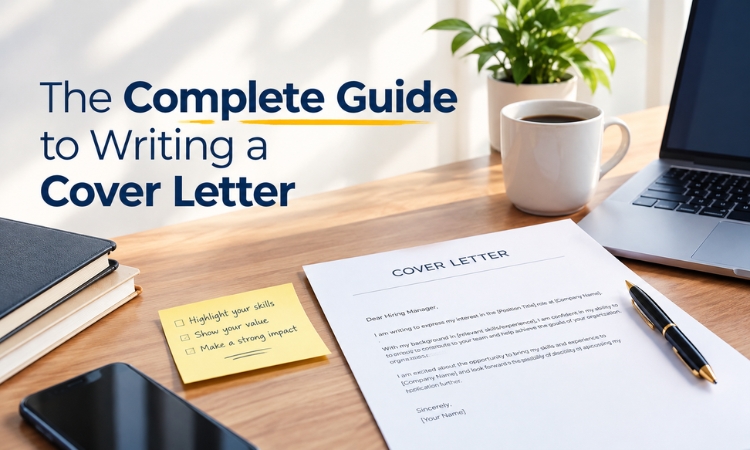
A cover letter is a short, one-page letter you send along with your resume when applying for a job. Think of it as your handshake before the interview — it’s the first thing that puts a voice and a personality behind the bullet points on your resume.
On its own, a cover letter doesn’t do much. It works with your resume, not instead of it. The resume proves what you’ve done; the cover letter explains why it matters for this specific role, and why you’re the person for the job.
Cover Letter vs. Resume: What's the Difference?
People sometimes treat these as interchangeable, but they serve different jobs:
- Your resume is a structured record, job titles, dates, skills, measurable results. It’s built to be scanned quickly.
- Your cover letter is a narrative. It’s closer to what you’d say if you were sitting across from the hiring manager, explaining in your own words why you’re a strong fit.
A resume without a cover letter can still get you noticed. A cover letter without a resume, though, leaves the hiring manager with claims and no evidence to back them up. You need both, and they need to work together, not repeat each other.
The Four Building Blocks of a Cover Letter
Every effective cover letter breaks down into four sections, each with its own job to do:
- Header – your name and contact details (phone, email, and often a LinkedIn link), positioned clearly at the top.
- Opening – this is where you address the hiring manager and deliver a hook strong enough to earn a full read.
- Body – the heart of the letter, where you connect your background to what the role actually needs. This isn’t a place to restate your resume line by line; it should read like a case you’re making, not a list.
- Closing – a confident wrap-up with a clear call to action and a professional sign-off.
Why a Cover Letter Still Matters
It’s easy to assume the resume does all the heavy lifting, but the cover letter has one job the resume can’t do: it gets the resume read in the first place. A flat or generic cover letter can cause a hiring manager to skim past your resume entirely no matter how strong it is. A sharp, specific cover letter does the opposite: it creates enough interest that the reader actively wants to see the résumé that backs it up.
Seven Things Every Cover Letter Needs
1. Pick the right format first. Before you write a word, choose a clean, readable layout. Skip anything overly decorative a simple, professional structure reads well whether you’re a first-time applicant or a senior hire.
2. Lead with a proper header. Your name, phone number, professional email address, and (optionally) your title or LinkedIn URL. Nothing casual here this is often the first thing a recruiter’s eye lands on.
3. Open with a real greeting. Whenever possible, address the hiring manager by name. If you can’t find a name, use their job title instead. Avoid the generic “To Whom It May Concern” it signals you didn’t bother to look.
4. Make your opening paragraph earn its place. The first two or three sentences decide whether the rest gets read. Keep them tight, lead with something specific an achievement, a shared connection to the company, genuine enthusiasm for the role and avoid throat-clearing.
5. Show, don’t just tell, your fit. This is where you connect your actual experience to what the job needs. Be concrete and specific rather than general “increased X by Y%” lands harder than “responsible for X.”
6. Make the case for why you, specifically. Go beyond qualifications and explain your motivation why this company, why this role, why now. Genuine interest is hard to fake and easy to spot.
7. Close with confidence and a clear next step. Thank the reader for their time, invite them to reach out, and sign off formally (“Sincerely,” “Best regards,” etc.). A short, well-placed postscript (P.S.) can also help you stand out it’s one of the few things readers’ eyes go to even when skimming.
Writing a Cover Letter With No Experience
If you’re just starting out, you won’t have a long work history to lean on and that’s fine. Shift the weight of your letter toward your education, coursework, internships, projects, and transferable skills. Employers hiring entry-level candidates are usually looking for potential and attitude as much as experience, so let your enthusiasm and willingness to learn come through clearly.
Writing a Cover Letter as a Senior Professional
At the senior level, the risk runs the other way too much history, not enough focus. Resist the urge to list every achievement from your career. Instead, pick two or three accomplishments most relevant to this role and go deep on them. Precision and restraint read as confidence; over-explaining reads as the opposite.
Final Thought
A cover letter isn’t a formality it’s often the deciding factor in whether your resume gets a second look. Tailor it to the role, keep it specific, and let it sound like an actual person made the case for hiring you.
Career notes from our writers
Once a fortnight, our resume writers send one short email on what is actually getting people shortlisted. No fluff, unsubscribe any time.

Written by
Rahul Ranjan
Rahul Ranjan is the Founder and Director of Writrox Solution Private Limited, where he has spent the last several years helping professionals transform the way they present themselves in today's competitive job market. From early-career professionals to CXOs and founders, his work has supported thousands of individuals in building stronger professional identities through strategic resumes, LinkedIn profiles, executive biographies, and personal branding.