Writing a resume becomes a little different when you have spent several years working in an industry. As a fresher your resume mainly focuses on education, internships, and projects. But once you have professional experience, employers want to know what you have worked on, what responsibilities you have handled, and how your contributions have helped previous organizations. That is the only reason why choosing the right experience resume format matters. A well-structured resume helps recruiters understand your career journey without having to go through unnecessary details. It also gives you an opportunity to highlight promotions, important projects and professional achievements. But simply listing every company you have worked for is not enough. Your resume should show how your experience makes you suitable for the position that you are applying for. Whether you have 2 years of experience or more than 10 this guide is for you if you want to understand how to prepare a professional resume.
What is the best resume format for experienced candidates?
For most experienced professionals the reverse chronological resume format is a good choice. It lists your current or most recent job first followed by previous positions in descending order. This makes it easier to understand your career progression experience and the latest responsibilities. But it is different from a fresher ‘s resume where educational qualifications and academic projects might receive more attention and experienced candidates’ resumes should give more space to professional achievements and work history. For example if you have worked as a marketing executive and moved into a senior marketing executive role later became a marketing manager your resume should clearly show the progression. It helps you understand how your responsibilities and expertise have developed with time. A good resume should also be easy to scan and compatible with the applicant tracking system used by many employers. Use clear section headings, consistent formatting and relevant keywords from the job description.
Types of resume formats for experienced professionals
Not every professional has the same career history. Someone with consistent experience in one industry might need a different layout from someone who has changed careers or worked across multiple fields.
Reverse chronological resume format
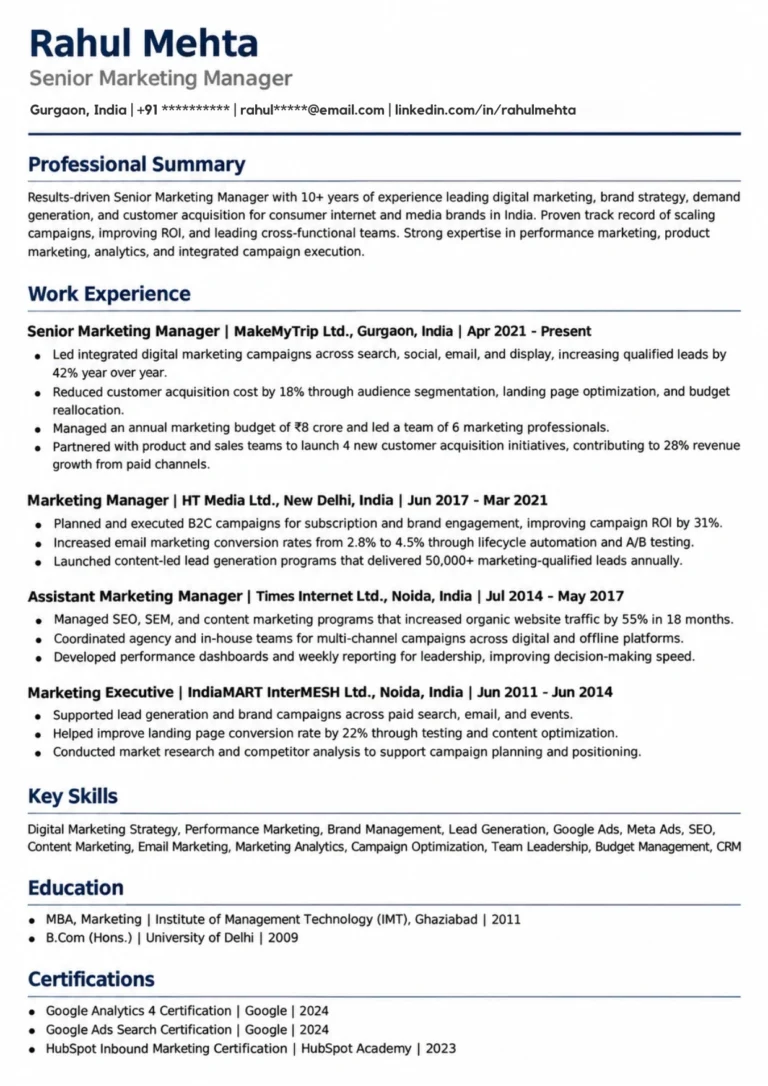
The format starts with your latest job and moves backwards through your employment history. It is useful if you have worked consistently in the cm industry or you have received promotions over the years. Employers can quickly see where you currently work, what positions you have held and how your career has progressed. It is generally the most suitable option for experienced candidates applying for similar roles.
Functional resume format
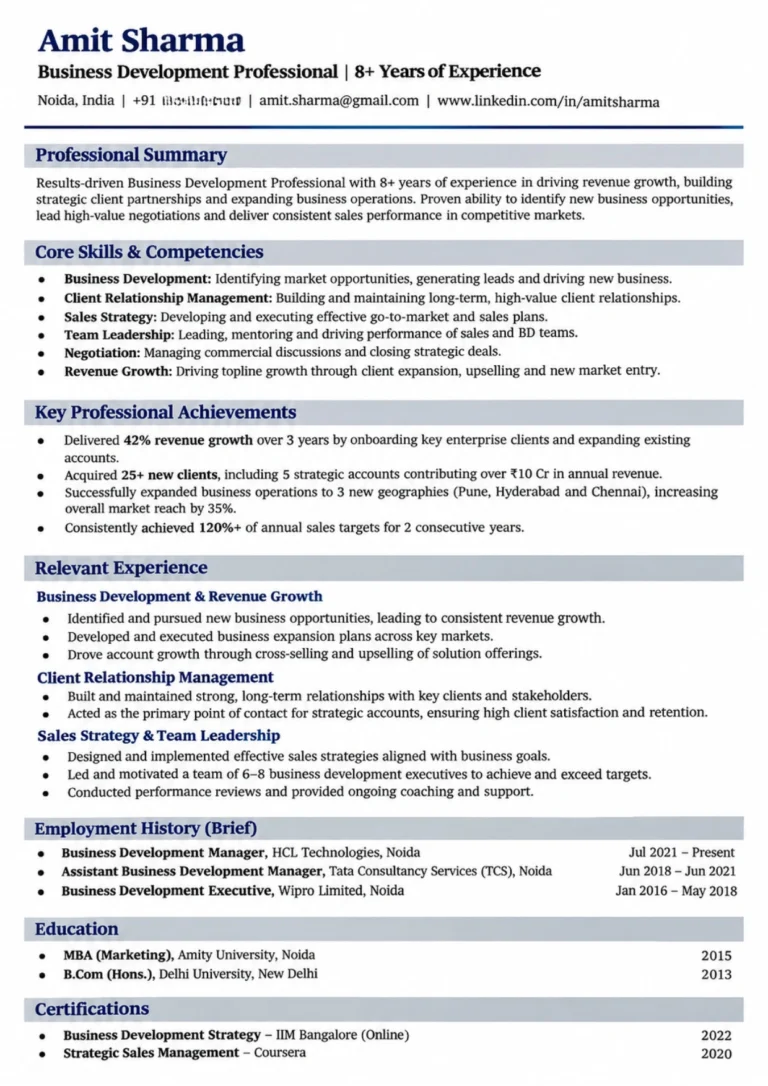
A functional resume focuses more on your skills and professional abilities than on your employment timeline. Instead of just giving extensive details about every job it groups your experience under skill based sections. The format might work for experts changing language, returning to work after a long break or moving into a different industry. But some recruiters might prefer a clear employment history and make sure your previous roles and dates are easy to find.
Combination resume format
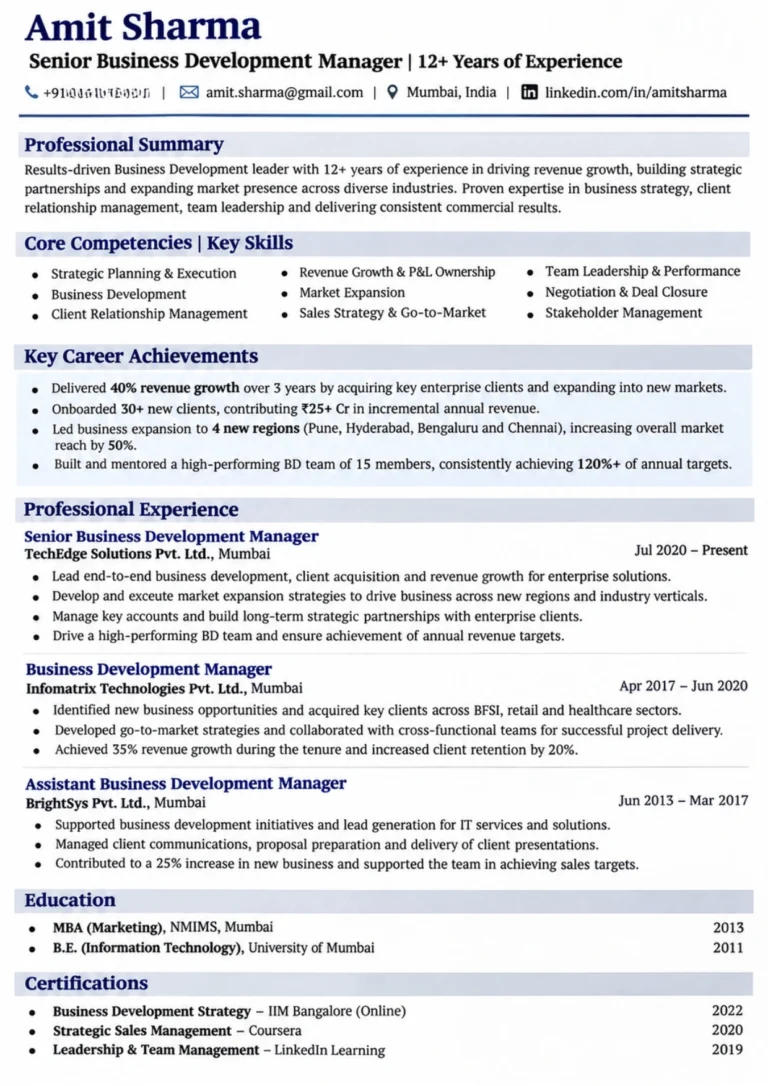
A combination resume format brings together the best parts of chronological and functional formats. It starts with a professional summary and a section highlighting important skills followed by detailed employment history. It is useful for professionals with specialist expertise or a strong mix of technical and managerial skills. For most candidates with a consistent employment history, reverse chronology is a sensible starting point.
Key sections to include in an experienced professionals resume
A professional resume should give the recruit years a clear picture of your background achievements and suitability for the role. You don’t need to include every detail about your career. Focus on information that helps employers understand what you can bring to the organization.
Contact information and professional headline
You can start with your full name, phone number, professional email address, city and LinkedIn profile URL. If you have a portfolio or a professional website relevant to your industry you can include that. Add a professional headline below your name. It should communicate your current role or expertise. You can refer to the resume headline examples to find a headline that suits your experience and target position.
Professional summary
Your professional summary is a short introduction to your career. It should mention your years of experience, primary skills, industry knowledge and one or 2 important achievements. Avoid generic statements like hardworking and dedicated professionals seeking a challenging position.
Work experience and career achievements
It is usually the most important section of an Experienced candidate’s resume. List your current and previous positions including the company name, job title, employment dates and location. Under each position explain your main responsibilities and achievements. Instead of writing only about routine tasks, show the results of your work wherever possible. Use relevant action verbs for resume writing like managed, developed , implemented and improved. Also you can try to quantify achievements on your resume wherever you have relatable figures.
Technical skills and core competencies
Your skills section should reflect what you can actually do including technical knowledge, industry specific abilities and relevant professional strengths. For example if you are an IT professional then you can mention Java Python or cloud computing while a marketing expert can include Google Analytics and content strategy. You can also include relevant soft skills like communication team management or problem solving.
Educational qualifications
For experienced professionals education usually comes after work experience and skills. Mention your highest qualification first followed by the institution’s name and graduation year. You don’t need to provide lengthy details about school projects or academic activities.
Professional certification and awards
Certifications show that you have invested time in learning new skills and keeping up with developments in your industry. Include relevant professional courses and industry certifications. Mention the certification name issuing organization and completion year.
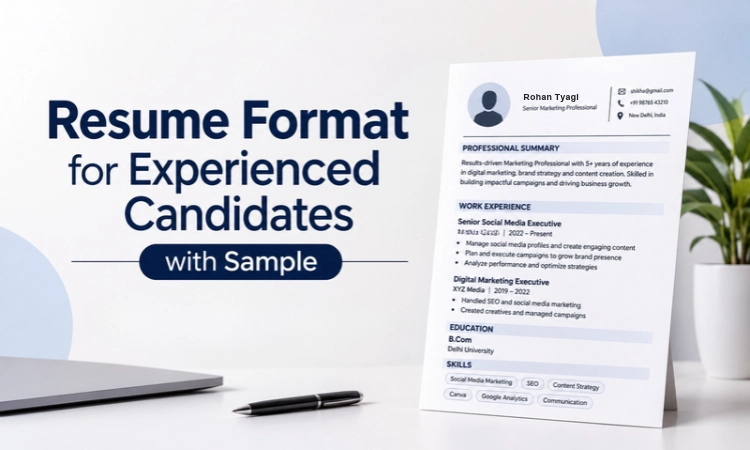
Resume format for experienced candidates with sample
YOUR FULL NAME
Job Title | Years of Experience | Specialization
Mumbai, India | +91 —-| yourname@email.com
LinkedIn:
PROFESSIONAL SUMMARY
Write 3–4 sentences introducing your professional background, years of experience, core expertise and one important career achievement.
WORK EXPERIENCE
Current Job Title – Company Name
Month Year – Present
- Describe your key responsibilities and projects.
- Mention measurable achievements and improvements.
- Highlight leadership or team management experience, where relevant.
Previous Job Title – Company Name
Month Year – Month Year
- Explain your responsibilities in the previous role.
- Include relevant projects and contributions.
TECHNICAL SKILLS AND CORE COMPETENCIES
- Industry-specific skills
- Software and technical tools
- Communication and leadership
- Project management
EDUCATION
Degree Name – University Name
Year of Completion
CERTIFICATIONS AND AWARDS
- Certification Name – Issuing Organisation, Year
- Professional Award – Year
How to Write a Resume Based On Use of Experience
Your resume should change as your career develops. The information that matters to someone with 2 years of experience might not be as important as someone applying for a senior management position.
Resume format for one to 3 years of experience
At this stage you are still building a professional profile. Your resume should focus on the responsibility you have handled, practical skills you have developed and contributions you have made in your current or previous organization. If you have completed internships or worked on important projects you can include them when they are relevant to the position.
Resume format for 4 to 7 years of experience
With 4 to 7 years of experience you should have enough professional achievements to make your resume more detailed. Focus on the projects you have managed, targets you have achieved and responsibilities you have taken on and any promotions you have received.
Resume format for 8 to 10 years of experience
At this stage, employers might expect you to demonstrate specialized knowledge, independent decision-making, and experience handling larger projects or teams. Your resume to highlight major contribution leadership responsibilities and client management experience and improvements you have brought to the previous organizations. You don’t need to describe every small task you have performed.
Resume format for senior level and executive professionals
Senior professionals and executives need a resume that communicates leadership, business understanding and strategic contributions. Instead of focusing heavily on daily responsibilities you can explain the impact of your decisions. Mention business growth revenue improvements and team development projects you have led.
Tips to make your professional resume stand out
Even if you have several years of experience your resume can get ignored if it is difficult to read or does not communicate your strengths clearly.
- Tailor your resume to every job application
Avoid sending the exact same resume to every employer. You need to read the job description and identify the skills, qualifications and experience the organization is looking for.
- Keep the formatting simple
Use readable fonts,, consistent spacing and clear section headings. A clean single column layout is often a safe choice, especially when applying through online recruitment portals.
- Focus on achievements rather than duties
Recruiters already have an idea of what a particular job title involves. What they want to know is how well you have performed. Mention specific results and projects wherever possible.
If you are unsure how to organize your information or present your achievements, professional resume writing services can help you prepare a resume that reflects your experience and career goals.
Conclusion
A good resume does more than just list your previous jobs. It tells recruiters what you have learned, how your career has developed and what you can contribute to the organization. Choosing the right experience resume format is the first step. For most experienced professionals a reverse chronological structure works well because it gives priority to recent work experience and career achievements. But you can also consider functional or combination formats depending on your career history. Before applying for your next position review your professional summary, update your achievements and remove details that no longer add value.
Career notes from our writers
Once a fortnight, our resume writers send one short email on what is actually getting people shortlisted. No fluff, unsubscribe any time.

Written by
Rahul Ranjan
Rahul Ranjan is the Founder and Director of Writrox Solution Private Limited, where he has spent the last several years helping professionals transform the way they present themselves in today's competitive job market. From early-career professionals to CXOs and founders, his work has supported thousands of individuals in building stronger professional identities through strategic resumes, LinkedIn profiles, executive biographies, and personal branding.