Recruiters have to go through hundreds of resumes every week. So, naturally, they cannot read your resume line by line. In fact, most recruiters don’t even read your resumes. Instead, they scan your resumes. They open your CV for only a few seconds. Hence, you need to make the recruiters stop at your resume. But how can you do that? Using your resume headline. In most cases, people either omit this element or write a meaningless headline that leads to recruiters never even contacting them again.
So, in this guide, we’ll discuss everything you need to know about writing resume headlines with formulas, mistakes to avoid, and a short checklist. We’ll also give you plenty of resume headline examples so that you can use whatever works for your position by just changing the details.
What is a Resume Headline?
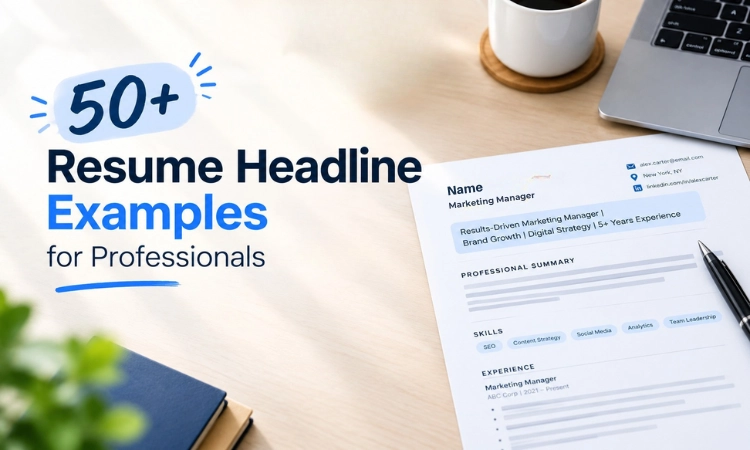
A resume headline is a single line that appears just beneath the name and contact information, and right before the summary and experience sections of the resume. The purpose of a resume headline is to tell the reader who you are as a professional. If you’re really serious about getting a job at your desired company, then you need to take resume headlines very seriously and keep them short, clear, and catchy.
Why is a Resume Headline Important?
Resume headlines are what hiring managers look for in a resume. Since they have so many applicants and resumes to go through, they spend only a few seconds going through them. So, a clear resume headline captures their interest and compels them to check out your resume.
Here is what a good headline for resume helps with:
- Shows your profession and its level at a glance
- Signals that you are familiar with the position that you are applying for
- Highlights your biggest advantage right from the start
- Sets a tone for the resume summary and experience sections
Resume Headline vs Resume Summary vs Career Objective
The confusion around a resume headline for a job and a resume summary is very common, but they are different in both content and usage. Here is a table that will help you understand the differences in a simple way:
Element | Resume Headline | Resume Summary | Career Objective |
Length | Usually one line | 2 to 4 sentences | 1 to 2 sentences |
Focus | Professional identity | Experience and achievements | Career direction |
Best use | Quick introduction | Detailed career snapshot | Career transition or early career |
Position | Near top of resume | Below headline and contact details | Near top of resume |
While freshers and career changers may use a career objective for resume documents, experienced professionals prefer a headline and a short resume summary.
How to Write a Strong Resume Headline
Writing a headline is not hard. It only needs some thought. Follow these six steps and you will land on something solid.
1. Start With Your Professional Role
Lead with your actual job title. Words like “hardworking” or “dedicated” say nothing.
- Instead of: Experienced Professional
- Use: Senior Business Analyst
2. Mention Relevant Experience
By mentioning your experience, you let recruiters quickly understand or decide whether or not you’re a good fit. A professional resume headline with experience sounds more convincing. Moreover, you should always try to show career progression on resume if possible.
- Example: HR Manager with 10+ Years of Talent Acquisition Experience
3. Add Your Strongest Skills or Specialization
Select 2 or 3 skills that you think are most valuable for the position you’re applying to.
- Example: Data Analyst | SQL, Power BI & Python | Business Intelligence
4. Include a Relevant Certification When Valuable
If the role you’re applying for requires a certification, always mention it on your resume. But if you think that your certification makes no sense based on the role you’re applying to, then skip this step.
- Example: PMP-Certified Project Manager | 8+ Years in IT Project Delivery
5. Add a Measurable Achievement When Possible
Numbers always speak for themselves, and when you put real numbers in your headline, you give recruiters a reason to vouch for you. Plus, they can make your headline more impactful.
- Example: Sales Manager | 9+ Years | Increased Regional Revenue by 35%
6. Match Your Headline With the Target Job
If you’re using the same headline for almost every job that you apply for, you’ll never get called by the recruiter for further discussion. Recruiters notice the efforts that you put in your resume and will give you importance based on that. So, always read the job position carefully and try to align your main position and core skills mentioned in your headline with the target position. It hardly takes a few minutes.
Simple Resume Headline Formula
If you are not able to come up with something, use one of these four formulas. Just substitute your data into it.
- Formula 1: [Job Title] + [Experience] + [Specialization
- Formula 2: [Job Title] + [Core Skills] + [Industry]
- Formula 3: [Job Title] + [Experience] + [Achievement]
- Formula 4: [Certification] + [Job Title] + [Specialization]
Almost every good resume headline you’ll see is based on some of these formulas. Select the formula that demonstrates your strong side.
If you’re a senior professional with ample experience but are confused about how to make use of them in your resume, then here are some resume tips for senior management professionals that can help.
50+ Resume Headline Examples
Below, you will find resume headline examples for experienced as well as freshers, sorted by industry. Use the structure of the examples, but do not copy them. The numbers and tools used here are illustrative. Always use numbers or facts that belong to you only. The best resume headline is a resume headline that is accurate and true for you.
Resume Headline Examples for IT & Software Professionals
1. Senior Software Engineer | Java, Spring Boot & Microservices | 9+ Years
2. Full Stack Developer | React, Node.js & MongoDB | SaaS Products
3. DevOps Engineer | AWS, Docker & Kubernetes | CI/CD Automation
4. QA Automation Lead | Selenium, Cypress & API Testing | 7+ Years
5. Data Engineer | Python, Spark & Snowflake | Cloud Pipelines
6. Cybersecurity Analyst | SOC Operations & Threat Detection | CISSP
7. Android Developer | Kotlin & Jetpack Compose | 5+ Years
Resume Headline Examples for Marketing Professionals
8. Digital Marketing Manager | SEO, PPC & Analytics | 8+ Years
9. Content Marketing Specialist | B2B SaaS | Organic Traffic Growth
10. Performance Marketer | Google Ads & Meta Ads | Managed ₹5 Cr+ Ad Spend
11. Brand Manager | FMCG | Product Launches & Consumer Insights
12. Social Media Strategist | Community Growth & Paid Campaigns
13. Email Marketing Lead | Automation, Segmentation & CRM
14. SEO Manager | Technical SEO & Link Building | E-commerce
Resume Headline Examples for Sales & Business Development
15. Enterprise Sales Manager | 10+ Years | Closed ₹20 Cr+ in Annual Deals
16. Business Development Executive | SaaS | 150% Quota Achievement
17. Regional Sales Head | FMCG | 12+ Years Leading Multi-State Teams
18. Inside Sales Specialist | Lead Qualification & Cold Outreach
19. Key Account Manager | B2B Manufacturing | Client Retention Focus
20. Sales Director | Insurance & BFSI | Distribution Network Expansion
21. Channel Sales Manager | Consumer Electronics | Partner Growth
Resume Headline Examples for Finance & Accounting
22. Senior Accountant | 8+ Years | GST, Taxation & Financial Reporting
23. Chartered Accountant | Audit & Compliance | Listed Companies
24. Financial Analyst | Forecasting, Budgeting & Variance Analysis
25. Accounts Payable Manager | ERP Systems | Process Efficiency
26. Treasury Analyst | Cash Flow Management & Risk Controls
27. Credit Risk Manager | Banking | Portfolio Analysis
28. Finance Controller | Manufacturing | IFRS & Month-End Close
Resume Headline Examples for HR Professionals
29. HR Manager with 10+ Years of Talent Acquisition Experience
30. HR Business Partner | Employee Engagement & Retention
31. Talent Acquisition Lead | Tech Hiring | 500+ Successful Placements
32. Payroll and Compliance Specialist | Indian Labour Laws
33. Learning & Development Manager | Leadership Programs
34. HR Generalist | Onboarding, Policy & Performance Management
Resume Headline Examples for Operations & Project Management
35. PMP-Certified Project Manager | 8+ Years in IT Project Delivery
36. Operations Manager | Logistics | Cost Reduction of 18%
37. Program Manager | Cross-Functional Teams | Agile & Scrum
38. Supply Chain Manager | Procurement & Vendor Management
39. Plant Operations Head | Steel & Heavy Industry | Lean Manufacturing
40. Project Coordinator | Construction | Scheduling & Budget Control
Resume Headline Examples for Customer Service Professionals
41. Customer Support Executive | Chat & Email | 95% CSAT Score
42. Customer Success Manager | SaaS | Churn Reduction & Onboarding
43. Call Centre Team Leader | 6+ Years | Quality Coaching
44. Technical Support Specialist | Tier 2 | Troubleshooting & Ticketing
45. Client Relations Associate | Banking | Query Resolution
46. Customer Experience Manager | Retail | Feedback & Process Improvement
Resume Headline Examples for Healthcare Professionals
47. Registered Nurse | ICU & Critical Care | 7+ Years
48. Clinical Pharmacist | Patient Counselling & Medication Safety
49. Medical Lab Technologist | Pathology & Quality Control
50. Physiotherapist | Sports Injury & Post-Surgery Rehabilitation
51. Hospital Administrator | Operations & NABH Compliance
52. Healthcare Data Analyst | Patient Outcomes & Reporting
How to Write an ATS-Friendly Resume Headline
In 2026, almost every big company and recruiter uses Applicant Tracking systems, or ATS. These systems read only the text of your resume, and don’t care about the design at all. So, it’s important that your resume is ATS-friendly and you have a keyword-optimised headline.
Here’s what you need to do:
- Use the official job title, not the creative one.
- Use one or two phrases from the job description.
- Separate the pieces with the vertical bar or comma.
- Don’t use icons, emojis, or any other symbols.
It doesn’t matter whether you’re writing a resume headline for Naukri, resume headline for LinkedIn, or Indeed. You need to follow these steps.
If you need some resume title examples, then refer to the above section.
Resume Headline for LinkedIn vs Resume
A headline for LinkedIn is similar to that of a normal resume, but they are meant for different audiences. The resume headline for LinkedIn is a bit broader and more search-oriented, as people find you through it. As for a resume headline, it should be concise and targeted to one particular job.
Feature | Resume | |
Purpose | Match a specific job | Attract recruiters through search |
Length | One short line | Up to about 220 characters |
Style | Focused and formal | Broader, can include value statement |
Editing | Changes per application | Updated occasionally |
Common Resume Headline Mistakes to Avoid
There are some common errors that you may want to avoid, particularly before uploading your resume to the portal, because a resume headline for Naukri may be seen by potential employers before opening your profile.
- Including vague words like “motivated” and “hardworking”
- Writing a whole sentence or paragraph, instead of one line
- Copying the headline of someone else without making any edits
- Trying to pack many skills and technologies into it
- Including claims that will be hard to prove during the interview
- Not mentioning your job title at all
Quick Checklist for Writing Your Resume Headline
Before you finalise, run through this once. It takes a minute.
- Does it contain my real job title?
- Is my experience level clear?
- Are there one or two strong skills or a specialisation?
- Does it fit the job I am applying for?
- Is it under one line and easy to scan?
- Have I checked the job post for resume keywords worth using?
Final Thoughts
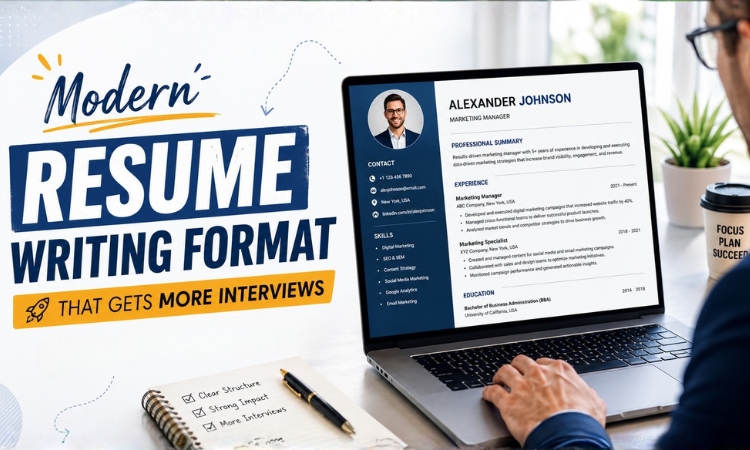
A headline is small, yet it does a lot of work. Spend ten focused minutes on it and adjust it for each role. The layout around it matters too, so review a modern resume writing format to make sure the whole page supports that first line. Start with the formulas above, borrow from the resume headline examples, and keep everything honest.
Frequently Asked Questions
1. What is the best headline for a resume?
The best resume headline is short, specific and true. It names your role, adds experience or a key skill, and matches the job you want. There is no single perfect line for everyone.
2. How do I write a professional resume headline?
Start with your job title, and then add years of your experience, your specialization, or a quantified result. If you feel stuck, then you can also use some professional headline examples from this guide.
3. What should I include in my resume headline?
Include your role, experience level, and one or two core skills. Optional, include a certificate or a significant achievement. Any information that doesn’t help to understand something about you and your work fast is not needed. In this way, your resume profile headline is also clean.
4. How long should a resume headline be?
One line, approximately 8-15 words long. Shorter is better, provided that it’s clear. This rule also applies to an ATS-friendly resume to prevent problems with formatting.
5. Is a resume headline the same as a resume summary?
No. A resume headline is just one line of text that describes who you are. The resume summary consists of several sentences that tell your work experience briefly. If you need some resume summary examples, visit this page and pair both elements.
6. Can experienced professionals include achievements in a resume headline?
Yes, and they should when the number is real and relevant. A resume headline for experienced professionals with a clear result, such as revenue growth or cost savings, gets attention quickly. Just keep it brief and be ready to explain the figure.
Career notes from our writers
Once a fortnight, our resume writers send one short email on what is actually getting people shortlisted. No fluff, unsubscribe any time.

Written by
Rahul Ranjan
Rahul Ranjan is the Founder and Director of Writrox Solution Private Limited, where he has spent the last several years helping professionals transform the way they present themselves in today's competitive job market. From early-career professionals to CXOs and founders, his work has supported thousands of individuals in building stronger professional identities through strategic resumes, LinkedIn profiles, executive biographies, and personal branding.