
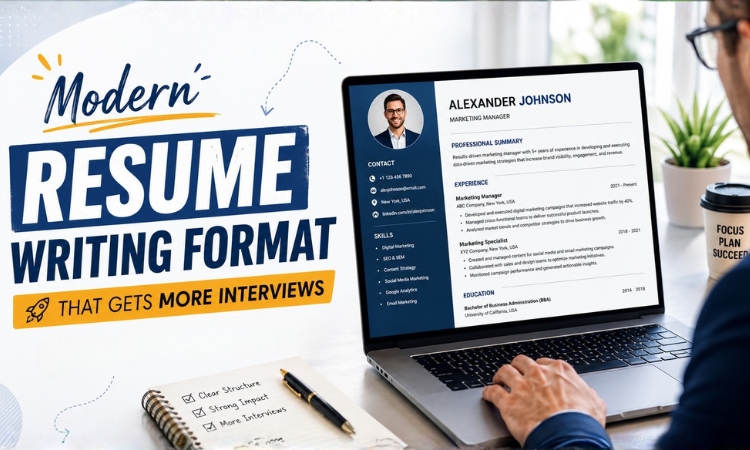
Modern Resume Writing Format That Gets More Interviews
Most people still treat a resume like some school assignment. They open an old Word file, update a few dates, add some random skills, and start sending it everywhere. Then they wonder why no one is calling back. The job market in 2026 is quite different now. Recruiters spend barely a few seconds scanning each resume. Also, many companies use ATS software before any human even looks at the application. So if a resume looks outdated, cluttered, or confusing, it is likely to be rejected before one even gets a chance. That is why understanding the proper resume format has become more important than ever. A modern resume is not just about adding qualifications. It is about presenting experience in a way that is clean, easy to scan, and relevant to the job.Using the right structure along with a strong Resume Summary Example can improve the chances of getting shortlisted. In this blog, we will cover the best resume structure, formatting rules, resume sections, and practical tips that actually help you get interviews. Whether you are a fresher, a student, a working professional, or switching careers, this guide will help you understand the best resume writing format for today’s hiring market. What is a Modern Resume Writing Format? The modern resume writing format is a clean, structured, and recruiter-friendly way to present career details. The only things they have are readability, relevant skills, measurable achievements, and ATS compatibility. Earlier, resumes were very formal and full of text. But now recruiters prefer resumes that quickly answer three things: Who are you? What skills do you have? Why should the company hire you? That is precisely what a modern resume does. If someone is wondering how to properly format a resume, the answer is quite simple. Keep it: Short Clear Relevant Organized A modern resume template usually includes: Professional header Summary section Skills section Work experience Education Certifications or extra details The main goal is to make information easy to scan in under 10 seconds. Best Resume Formats to Use in 2026 There is no single “best” resume format. You should never focus on which resume format is “Best.” Instead, you should use a resume format that suits your career stage and profile. Here are some of the most effective ones: 1. Chronological Resume Format This is the most widely used format. It lists work experience from latest to oldest. Best for: Experienced professionals People with stable career growth Candidates with consistent experience Structure: Header Summary Skills Work Experience Education This is usually considered the safest and most accepted resume writing format. 2. Functional Resume Format This format focuses more on skills than work history. Best for: Freshers Career changers People with employment gaps Instead of highlighting timelines, it highlights abilities and projects. But many recruiters still prefer chronological resumes. So a functional resume should be used carefully. 3. Combination Resume Format As the name suggests, this format combines both skills and work experience. Best for: Mid-level professionals Freelancers Creative professionals People switching industries This format allows you to highlight transferable skills while also showing your experience. Many modern resume templates now use this structure because it balances both strengths and achievements quite well. Why Resume Format Matters for Getting Interviews Many people think only experience matters. But formatting matters almost equally. Imagine a recruiter opening two resumes. One is messy, long, and difficult to read. The other one is clean, structured, and easy to scan with a clear career objective for resume section. Even if both candidates have similar qualifications, a cleaner resume usually gets shortlisted first. Format always creates the first impression. A good ATS-friendly resume also helps the application to pass automated screening systems. ATS software scans resumes for keywords, formatting, job titles, and readability. If formatting is too complex, software may fail to read important details properly. This is why modern resume formatting is now less about design and more about clarity. Good formatting helps recruiters to: Find skills faster Understand experience quickly See career growth easily. Identify relevant achievements That is why learning a simple resume format can significantly improve interview chances. Key Elements of a Modern Resume Writing Format Professional Header The header should be simple and professional. Include: Full name Phone number Professional email address LinkedIn profile Portfolio link if relevant Avoid: Nicknames Multiple phone numbers Fancy email IDs Full home address Strong Professional Summary The summary is one of the most important parts of a resume. This is the first section recruiters read. A concise summary should explain: Experience level Main skills Industry expertise Career strengths This section works much better than old-fashioned career objective statements. Still, if someone is new to the field, adding a brief Career Objective to the resume can help. Example for freshers: “Motivated BBA graduate with strong communication and analytical skills looking for an opportunity in digital marketing and brand management.” Example for experienced professionals: “Content strategist with 4+ years of experience in SEO writing, brand storytelling, and content planning for SaaS and education brands.” Skills Section The skills section should be easy to scan. Use bullet points instead of paragraphs. Moreover, only put skills that are relevant to the job you’re applying for. You can also refer to professional Resume Skills Examples to choose the most relevant skills for your resume. Work Experience Work experience is what concerns recruiters most. You need to pay careful attention to the work experience. You should list your work experience in descending order, with the most recent job first and the older ones after. Education Details Keep this section simple. Mention: Degree College or University Graduation year CGPA or percentage, optional if not impressive Freshers can place education above work experience. Experienced professionals should keep it below the experience section. Certifications and Additional Information This section can help in standing out. One can include: Certifications Languages Volunteer work Projects Portfolio links Awards This section is especially useful for freshers who have limited experience. Tips to Create a Resume That Gets More
Modern Resume Writing Format That Gets More Interviews Read More »